First Graders: Face As Abstract Image

image

In our other Lower Elementary class, we had different time constraints.  After a sucessful round of careful, studied portraiture, I wanted to give them the same opportunity to go wild with the face.

image

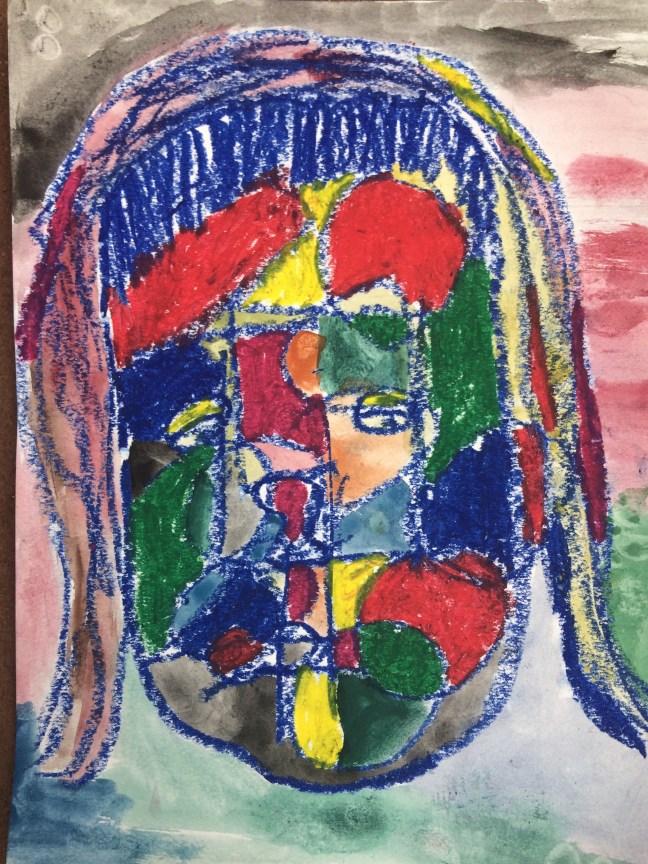
Keeping proportions in mind this time, they each drew a face freehand (I told them it *could* be a self-portrait if they so chose). Then, they wrote the numeric form of their birthdays in large numbers, overlapping across the page (e.g. 05/17/09). This created dynamic shapes, which they were then instructed to color in — first, with oil pastels, then, with watercolor.
image

All colors were available to each child. Their inherent sense of pattern and proportion was their guide. These were done within the space of an hour, and I absolutely adore how they turned out. All the work shown on this page was done by first graders (!)image

Picasso and the African Mask

image

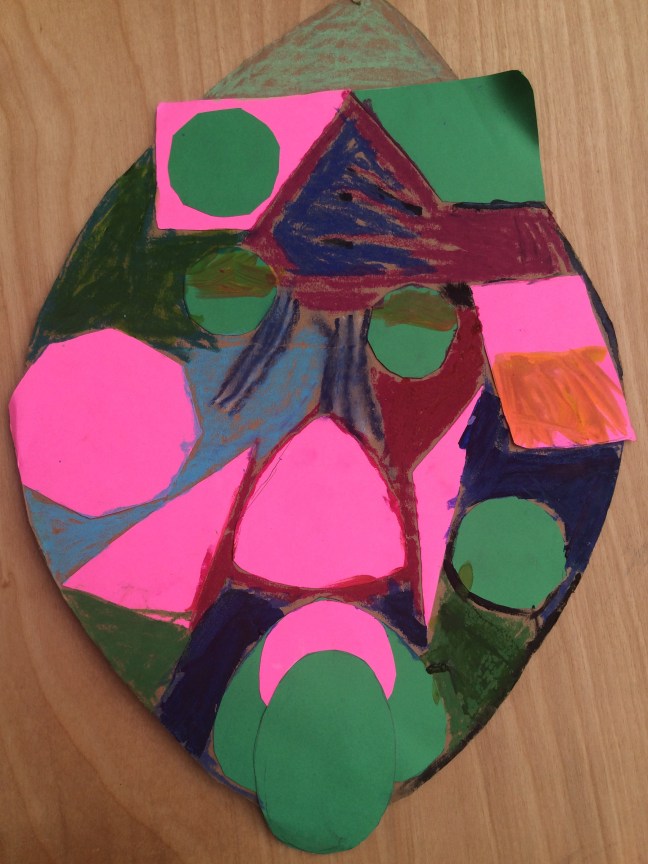
After we studied proportions of the face, and I drilled in “EQUATOR EYES! EQUATOR EYES!”until was blue in the face, I thought we could have a little fun with knocking those features back out of proportion. In a historical parallel to Pablo Picasso (only with a much more sped up timeline!), we moved on from our carefully studied portraits to do 3D masks based loosely on African masks and cubism.

I wanted to let the children have fun with this project. In preparation, I had them cut out a dozen shapes traced from the metal inset Montessori work. We then used these shapes as a launching pad for our “face.” It was great for them have something tangible to play with and physically move around. We talked about pattern and placement. This is a good exercise to allow the children to practice making choices and be truly creative.

image

Ink Only: Proportions of the Face

image

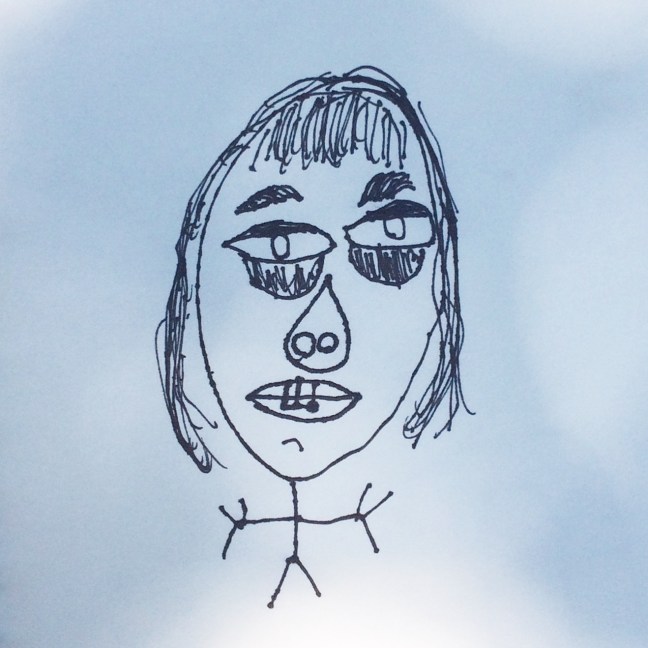
The children got their first lesson in proportions of the face! I demonstrated that the eyes are in fact in the middle of the head (not the tippy top, as children are wont to do). Just to emphasize this fact, I call them “equator eyes”, a reference these Montessori kids know well.

I showed them that the bottom of the nose is usually about half way between the eyes and base of the chin, the bottom of the mouth at the midpoint between the nose and chin. Then, we broke into pairs and drew each other. Again, to encourage strength of line and hand-eye coordination, we used only sharpie markers. imageSome students chose to add a tiny body to their portraits. Fine by me, as long as those facial proportions are observed!  They have so much character, I think some of them could go into illustration right now. I was wowed by their innate talent, and love these results. image

Not Without a Notebook: The Importance of the Field Journal

image

On a beautiful February day, I took the children venturing out into the acreage we are lucky enough to have behind school.  Field journals in hand, we collected our specimens along the dry creek bed and brought them back to be examined.  It is only upon thorough investigation of nature that we can begin to comprehend its complexity.

image

We spoke about how once upon a time, in a not-so-distant past, this would have been a scientist’s only method of recording his or her findings.  I brought an example of a sketch I made from a plant at home.  I encouraged them to look at what they are drawing more than the paper, and to draw what they see, rather than what they think they should see. Utilizing only ink is part of a plan to help them with their hand-eye coordination. It’s all about trust. I’m really happy with the detail these first, second, and third graders were able to capture.

I would love to repeat this exercise equipped with reference for what we can expect to find in Central Texas, so that our journals can have a bit more accuracy than “stick” or “moss ball.”  Still, I am proud of the students. They were all truly engaged in the process.